
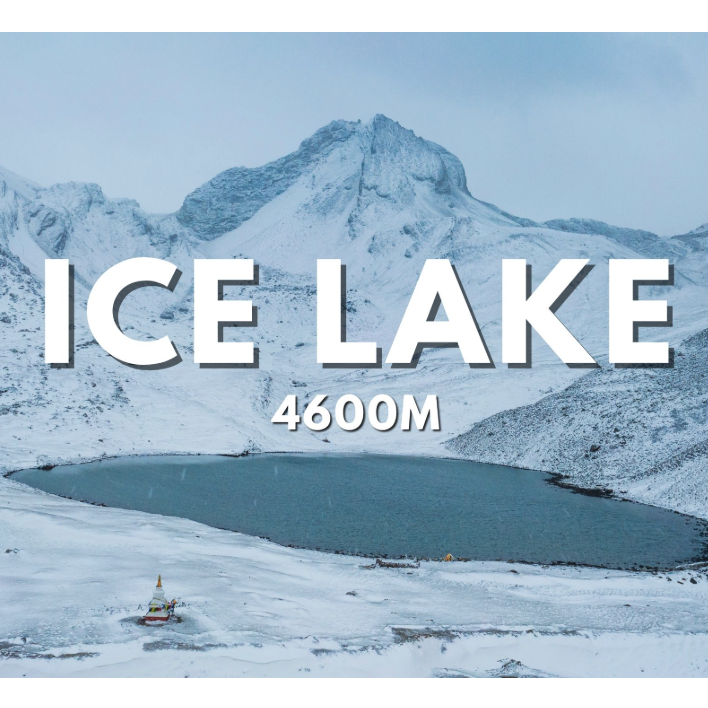
Ice Lake Khicho Tal Trek
A High-Altitude Day Hike from Manang on the Annapurna Circuit

High above the traditional village of Manang lies Ice Lake, locally known as Khicho Tal, a spectacular alpine lake surrounded by the dramatic peaks of the Annapurna region.
At approximately 4,600 metres, reaching Ice Lake is not simply a short viewpoint walk. It is a demanding high-altitude hike that combines steep mountain terrain, thin air and spectacular Himalayan scenery.
For trekkers following the Annapurna Circuit, the hike is particularly valuable because it can form part of the acclimatization process before continuing toward higher elevations and eventually crossing the Thorong La Pass.
The journey begins in Manang, one of the most important acclimatization points on the Annapurna Circuit. From the village, the trail climbs steadily through alpine terrain, gradually leaving behind the greener landscapes of the lower Marsyangdi Valley.
As the altitude increases, vegetation becomes increasingly sparse. The landscape opens into rocky slopes, dry mountain terrain and expansive Himalayan views.
The final climb is demanding, but reaching Khicho Tal provides a memorable reward: a peaceful high-altitude lake surrounded by the mountains of the Annapurna region.
For travellers looking for more than simply ticking off a destination, the Ice Lake hike offers an opportunity to experience the changing landscape of the Himalayas while preparing for the higher stages of the Annapurna Circuit.
Ice Lake Khicho Tal at a Glance
| Feature | Details |
|---|---|
| Location | Above Manang, Annapurna Region |
| Starting Point | Manang Village |
| Elevation of Manang | Approximately 3,500 m |
| Ice Lake Elevation | Approximately 4,600 m |
| Elevation Gain | Approximately 1,100 m |
| Distance | Approximately 12–14 km round trip |
| Walking Time | Approximately 7–9 hours |
| Difficulty | Challenging |
| Best Seasons | Spring and Autumn |
| Type | High-altitude day hike |
| Accommodation | Teahouse/lodge in Manang |
| Guide | Recommended |
| Technical Climbing | Not required |
Distances, walking times and elevation figures can vary according to the exact trail and current route conditions.

Why Add Ice Lake to the Annapurna Circuit?
Manang is traditionally used as an acclimatization point on the Annapurna Circuit.
Instead of treating an acclimatization day simply as a day of rest, trekkers can use it to undertake a controlled high-altitude excursion and return to Manang for another night.
The Ice Lake hike offers exactly this type of experience. It allows trekkers to:
- Spend time at a higher elevation
- Experience alpine terrain
- Enjoy panoramic mountain views
- Build confidence before higher sections of the circuit
- Prepare for the increasing altitude ahead
- Experience a quieter side of the Annapurna region
The key, however, is proper acclimatization. The Ice Lake hike should not be approached as a race. The purpose is to ascend gradually, spend appropriate time at altitude and return safely to Manang.
Recommended Ice Lake Khicho Tal Itinerary
Day 1: Acclimatization in Manang
Manang Village Exploration and Preparation for Ice Lake
Altitude: Approximately 3,500 m | Activity: Acclimatization and short exploration | Walking: Approximately 2–4 hours of easy walking
After arriving in Manang as part of the Annapurna Circuit, this day is used to allow the body to adjust to the increasing altitude. Rather than immediately attempting the Ice Lake hike, we recommend spending the day exploring Manang and undertaking a short, comfortable walk around the surrounding area.
Manang is one of the most fascinating settlements on the Annapurna Circuit, with traditional stone houses, Buddhist influences, mountain views and a strong connection to the historic trading routes of the region.
The afternoon can be used to prepare for the following day's hike. Your guide will review: weather conditions, trail conditions, expected walking duration, water requirements, clothing and equipment, personal health, and departure time.
An early dinner and good rest are recommended before the Ice Lake excursion.
Overnight: Manang
Day 2: Manang to Ice Lake Khicho Tal and Return
The Main Ice Lake Adventure
Starting altitude: Approximately 3,500 m | Ice Lake: Approximately 4,600 m | Elevation gain: Approximately 1,100 m | Walking distance: Approximately 12–14 km round trip | Walking duration: Approximately 7–9 hours
The day begins early in Manang. An early start is important because it provides sufficient time for the ascent, rest at the lake and return journey while allowing greater flexibility if mountain weather changes later in the day.
After breakfast, begin walking towards Ice Lake. The trail gradually climbs above Manang, initially passing through alpine vegetation and open mountain terrain. As you gain elevation, the views across the Annapurna region become increasingly impressive.
Depending on the season and conditions, trekkers may encounter grazing animals, prayer flags, traditional mountain landscapes and dramatic views towards peaks including Annapurna II, Annapurna III, Gangapurna, Chulu peaks, and other surrounding Himalayan summits. The landscape becomes progressively more barren as the trail climbs.
The Climb to Ice Lake
The higher section of the trail is where the challenge becomes more noticeable. The slope becomes steeper and the reduced oxygen level makes even a moderate climb feel considerably harder. This is where maintaining a slow and consistent pace becomes important. There is no advantage in rushing. A steady walking rhythm with regular short breaks allows trekkers to conserve energy while continuing to gain altitude.
Reaching Khicho Tal
At approximately 4,600 metres, Ice Lake sits in a dramatic alpine environment surrounded by the mountains of the Annapurna region. Depending on the season and weather, the lake may appear frozen or partially frozen, while the surrounding landscape can range from snow-covered terrain to dry alpine rock.
Take time to rest, have some snacks and enjoy the mountain panorama. This is also the ideal place for photography. However, because of the altitude, the stop should remain sensible rather than excessively long. After approximately 30 minutes to one hour, begin the descent towards Manang.
Descending to Manang
The return journey follows the trail back towards Manang. Although descending is generally less physically demanding than climbing, trekkers should remain careful on steep and loose sections. Trekking poles can be particularly useful.
After approximately 2.5–3 hours of descent, arrive back in Manang. Enjoy a well-earned meal and rest for the evening.
Overnight: Manang
Day 3: Manang to Yak Kharka
Continue Deeper into the Annapurna Circuit
Approximate altitude: 4,050 m | Walking: Approximately 3–5 hours
After completing the Ice Lake excursion, the following morning marks the continuation of the Annapurna Circuit towards higher elevations. The trail gradually leaves Manang and heads towards Yak Kharka. The landscape becomes increasingly alpine, with fewer trees and more open mountain terrain.
The previous day's Ice Lake excursion provides valuable exposure to higher altitude, but trekkers should still continue to ascend gradually and remain attentive to how their bodies are responding.
The trail passes through high mountain landscapes with views of the surrounding Annapurna and Chulu ranges. Arrive at Yak Kharka and settle into the teahouse. The remainder of the day is for rest and preparation for the next stage towards Thorong Phedi and the Thorong La Pass.
Overnight: Yak Kharka
Alternative: Ice Lake as Part of the Full Annapurna Circuit
For travellers already undertaking the Annapurna Circuit, the recommended sequence is:
Lower Marsyangdi Valley → Manang → Acclimatization → Ice Lake → Yak Kharka → Thorong Phedi → Thorong La → Muktinath
This makes Ice Lake more than an additional excursion. It becomes part of the gradual progression into the high-altitude section of the Annapurna Circuit.
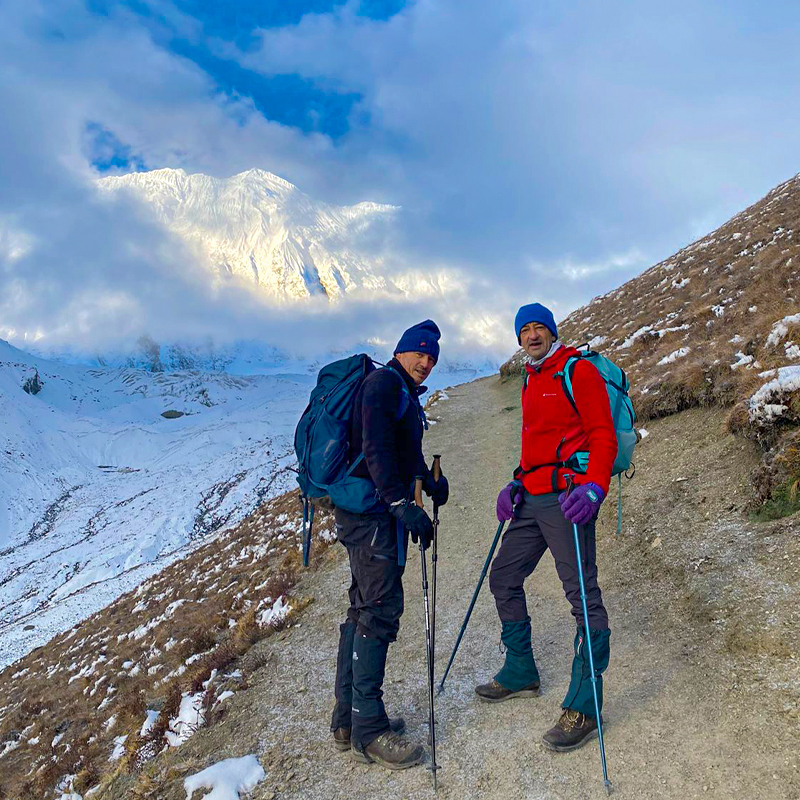
Ice Lake Khicho Tal Difficulty
The Ice Lake hike is generally considered challenging. The main difficulty is not the distance alone. It is the combination of:
- Approximately 1,100 metres of elevation gain
- Starting from an already high altitude
- Long uphill sections & Thin air
- Steep terrain & Changing weather
- A 7–9 hour walking day
The hike does not require technical mountaineering skills. However, it should not be underestimated. Someone who has comfortably completed lower-altitude hiking may still find Ice Lake demanding because altitude changes the physical experience considerably. For this reason, spending an appropriate amount of time acclimatizing in Manang before attempting the hike is strongly recommended.
Altitude and Acclimatization
Altitude is one of the most important considerations on the Ice Lake hike. Manang itself is already around 3,500 metres, while Ice Lake rises to approximately 4,600 metres. This means the body is exposed to a significant increase in elevation during a single day. A responsible approach includes:
- Walk slowly: Do not race uphill.
- Stay hydrated: Drink regularly throughout the day.
- Eat properly: Carry sufficient food and energy snacks.
- Listen to your body: Headache, nausea, dizziness, unusual fatigue or difficulty coordinating movement should not simply be ignored.
- Communicate with your guide: If you feel unwell, inform your guide immediately.
- Descend if symptoms become concerning: Altitude-related symptoms can worsen at higher elevations. Descending is an important response when serious symptoms develop.
The Ice Lake excursion should therefore be treated as an acclimatization hike, not an endurance competition.
Best Time for Ice Lake Khicho Tal
Spring: March to May
Spring is one of the best periods to experience the Annapurna region. The weather generally becomes warmer compared with winter, while mountain landscapes begin to change with the season. The lower sections of the Annapurna region can also display spring vegetation and rhododendron blooms. Higher sections remain distinctly alpine, creating a dramatic contrast between forests below and the barren mountain terrain around Ice Lake. Clear mornings can provide excellent Himalayan views.
Autumn: September to November
Autumn is traditionally one of Nepal's most popular trekking periods. After the monsoon, the atmosphere often becomes clearer, while the trails are generally more suitable for trekking. From the higher sections around Ice Lake, trekkers can enjoy impressive views of the Annapurna and Chulu ranges when visibility is good. For travellers who want a combination of stable trekking conditions and Himalayan scenery, autumn is an excellent time to consider the Ice Lake excursion.
Winter Conditions
Winter trekking is possible for experienced and properly equipped trekkers, but conditions can become significantly more demanding. Snow and ice may cover parts of the trail. Temperatures can drop substantially, particularly around sunrise and at the lake. The trail may also become slippery or difficult to follow under heavy snow. Winter attempts should therefore be based on current local conditions, not simply on a calendar. Mountain Tiger Nepal recommends checking trail and weather conditions with the local guide team before proceeding.
Monsoon Conditions
The monsoon period generally brings more rainfall to much of Nepal. Cloud, rain and slippery trails can affect the experience, while mountain visibility may be reduced. Conditions around Manang can differ from lower parts of the Annapurna region because of the rain-shadow environment, but this does not mean that the Ice Lake trail is automatically suitable throughout the monsoon. Heavy rainfall elsewhere can also affect access to the Annapurna Circuit. For this reason, monsoon trekking should be assessed according to current weather, road access and trail conditions.
What to Pack for the Ice Lake Hike
Although Ice Lake is a day hike, trekkers should prepare for high-altitude mountain conditions.
| Warm insulated jacket | Windproof outer layer | Thermal layer |
| Trekking trousers | Comfortable trekking boots | Warm gloves |
| Hat or beanie | Sunglasses & Sunscreen | Lip balm |
| Trekking poles | Small daypack | Water bottle/hydration system |
| Energy bars/snacks | Headlamp & First-aid supplies | Personal medication |
| Camera / smartphone | Power bank | Extra warm layer |
Weather can change quickly in the mountains, so carrying an additional warm layer is recommended even when the morning starts with clear skies.
What Makes the Ice Lake Trail Special?
The Changing Landscape
One of the most interesting aspects of the hike is how quickly the environment changes. Starting from Manang, trekkers gradually leave behind the settlement and vegetation. The landscape becomes: Village → Alpine hillside → Rocky terrain → High mountain landscape → Ice Lake.
Mountain Views
Ice Lake provides an elevated perspective over the Annapurna landscape. On clear days, trekkers may see Annapurna II, Annapurna III, Gangapurna, Chulu peaks, and other surrounding Himalayan peaks.
A Different Side of Manang
Manang is not only a stopping point on the Annapurna Circuit. It is a destination in its own right. The village and surrounding settlements reflect the distinctive culture and architecture of the upper Marsyangdi region. The Ice Lake excursion adds another dimension by connecting the cultural landscape around Manang with the high alpine environment above it.
Why Start Early?
An early departure is strongly recommended. Starting early provides cooler walking temperatures, more time for gradual ascent, better flexibility, more time at the lake, sufficient time for descent, and greater protection against afternoon weather changes. A day hike at 4,600 metres should therefore never be planned around arriving back at the last possible daylight hour.
Why a Guide Is Valuable
Although Ice Lake is a popular excursion from Manang, having an experienced local guide is highly beneficial. A guide can assist with route navigation, weather assessment, pace management, altitude awareness, local trail conditions, emergency response, and communication with local communities. The value of a guide becomes even more important during poor visibility, snow or changing trail conditions.
Experience the Journey: Himalayan Vlog
Watch a complete visual walkthrough of the Annapurna Circuit and the Ice Lake Trek, experiencing the changing landscapes and high-altitude challenges.
Ice Lake vs. Simply Resting in Manang
For trekkers who are acclimatizing before Thorong La, the choice is not necessarily between “Do nothing” and “Climb Ice Lake.” The appropriate choice depends on the individual's acclimatization status, health, fitness, previous altitude exposure and current conditions.
For properly acclimatized trekkers who are feeling well, Ice Lake can provide a rewarding high-altitude excursion. For trekkers experiencing altitude symptoms or unsuitable weather, a shorter acclimatization walk around Manang may be more appropriate. The objective is safe progression, not completing every optional hike.
A Recommended Annapurna Circuit Sequence
For travellers incorporating Ice Lake into a longer Annapurna Circuit itinerary, Mountain Tiger Nepal recommends allowing adequate acclimatization rather than treating the lake as a rushed side trip. A typical sequence can be:
- Day 1: Kathmandu to Besisahar
- Day 2: Besisahar to Chame
- Day 3: Chame to Pisang
- Day 4: Pisang to Manang
- Day 5: Manang acclimatization and Ice Lake Khicho Tal hike
- Day 6: Manang to Yak Kharka
- Day 7: Yak Kharka to Thorong Phedi
- Day 8: Thorong Phedi to Thorong La Pass and Muktinath
- Day 9: Muktinath to Jomsom
- Day 10: Jomsom to Pokhara
- Day 11: Pokhara exploration
- Day 12: Pokhara to Kathmandu
This is an illustrative itinerary and can be extended or modified according to the traveller's pace, acclimatization requirements, road conditions, weather and preferred trekking style.
The Ice Lake Experience in One Day
For trekkers already acclimatized in Manang, the experience can be summarised simply:
- Early morning: Breakfast and preparation in Manang
- Morning: Begin the gradual ascent
- Late morning / midday: Continue through increasingly alpine terrain
- Around midday: Reach Ice Lake / Khicho Tal
- At the lake: Rest, photograph the landscape and enjoy the mountain views
- Early afternoon: Begin descent
- Afternoon: Return to Manang
- Evening: Rest and prepare for the next stage of the Annapurna Circuit
Responsible Trekking Around Ice Lake
The high Himalayas are fragile environments. Travellers can help protect them by carrying all waste back, avoiding single-use plastics where possible, staying on established trails, respecting local communities, avoiding unnecessary disturbance to animals, respecting prayer flags and religious sites, using designated accommodation, and following local trekking regulations.
The beauty of Ice Lake comes partly from its sense of remoteness. Keeping the landscape clean and undisturbed helps preserve that experience for future travellers.
Is Ice Lake Worth Adding to Your Annapurna Circuit?
For trekkers who are appropriately acclimatized and physically prepared, Ice Lake offers a rewarding combination of challenge, altitude and scenery. It transforms an acclimatization day in Manang into a memorable mountain experience.
The hike is demanding. It is not a casual walk. But that is also what makes reaching Khicho Tal satisfying. You earn the view. And after returning to Manang, you are better positioned to continue towards the higher sections of the Annapurna Circuit.
Mountain Tiger Nepal
Your Adventure for Nepal Tibet Bhutan Starts Here.
Mountain Tiger Nepal operates trekking experiences across the Annapurna, Everest, Manaslu, Dolpo, Mustang and other Himalayan regions of Nepal.
For travellers planning the Annapurna Circuit, the Ice Lake Khicho Tal day hike can be incorporated into the itinerary according to acclimatization needs, weather, trail conditions and individual trekking pace.
Our local trekking team can coordinate trekking permits, experienced guides, porters, teahouse accommodation, ground transportation, acclimatization planning, route monitoring, and emergency coordination.
The mountains should never be rushed. The best trekking experience is one that allows you to walk at the right pace, adapt to the altitude and enjoy the journey.
Plan Your Circuit Trek