
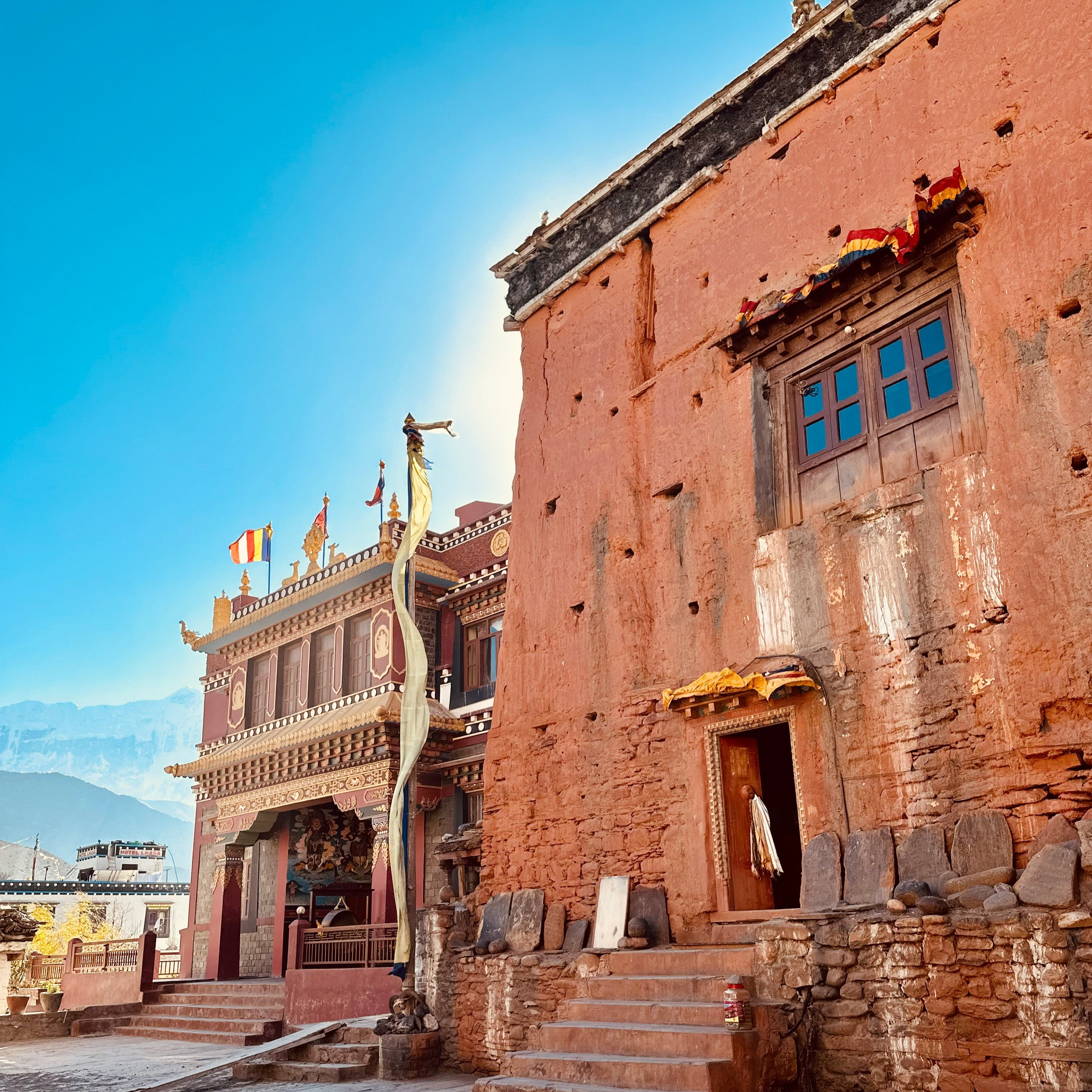
Lomanthang – The Walled Kingdom of the Himalayas
Geographic and Cultural Context
- Coordinates:
Latitude: 28°33’52’’ to 29°19’52’’
Longitude: 83°28’56’’ to 84°15’18’’ - Area: 727 sq. km
- Population: Approximately 1,899
- Elevation: Around 3,800 meters above sea level
- Temperature: Max 23.1°C / Min -2.7°C
- Annual Rainfall: 323 mm
- Climate Zones: Temperate, Sub-Alpine & Alpine
A Legacy of the Ancient Kingdom of Lo
Founded in 1380 AD by King Ame Pal, Lomanthang was the walled capital of the Kingdom of Lo. The city was designed as a fortress, with an 856-meter-long wall that is 6 meters high and 1 meter thick, built entirely of clay. According to local elders, yaks were used to compact the wall during construction. The name Lo-Man-Thang literally translates to "Heart’s Desired Land" – Lo (heart), Man (wish), Thang (land).
Even after Nepal's unification by the Shah dynasty in the 18th century, the kings of Lo retained semi-autonomous rule until 2008, when the monarchy in Nepal was officially abolished. The last king, Jigme Dorje Palbar Bista, reigned until the declaration of the republic.
Cultural and Religious Heritage
Lomanthang is deeply influenced by Tibetan Buddhism, with its language, culture, festivals, and monasteries reflecting this bond. Major 15th-century monasteries inside the walls include:
- Monkhar Palace – the royal residence
- Thupchen Monastery – renowned for murals and architecture
- Jampa Lhakhang (Jhyampa Gompa) – the “God House” with a large Maitreya Buddha
- Chhode Monastery – a functioning monastic center still active today
Lomanthang celebrates vibrant festivals like Teej, Yartung, Lhosar, Pange, Holi, and Ghuichang, often with masked dances, horse racing, and sacred rituals that attract domestic and international visitors.
Mysterious Caves & Ancient Art
North of Annapurna, near Lomanthang, over a dozen sky caves carved into vertical cliffs at elevations of 4,300 meters were discovered in 2007. These caves house:
- 13th-century Buddhist murals with Newari influence
- Tibetan scriptures in ink, silver, and gold
- Pre-Christian era pottery shards
- Murals of Buddha with disciples, palm trees, birds, and Indian textiles – a unique blend of subcontinental and trans-Himalayan art styles
These findings are of immense archaeological and historical significance.
Access & Travel
- Distance from Jomsom: 50 km north
- Access Routes:
- Pokhara to Jomsom: 158 km by bus, jeep, or flight
- From Jomsom: Trek or jeep ride to Lomanthang (special permit required)
Note: Upper Mustang including Lomanthang lies in a restricted area, and foreigners need a special permit to enter.
Accommodation & Amenities
Despite its remoteness, Lomanthang offers basic to comfortable accommodations, including:
- Hotels, Lodges, Community Homestays, and Eco-Resorts
- Health Services: Hospital, health posts, clinics, and Ayurvedic centers
- Facilities: Clean drinking water, electricity (solar and micro-hydro), and communication services
Cultural and Ecotourism Center
Today, Lomanthang is not just a site of heritage but a growing tourism destination:
- Once a major trade route between Nepal and Tibet
- Now known for trekking, cultural immersion, and Buddhist spiritual journeys
- Preserved through community-based tourism and government protection as part of the Upper Mustang Trek
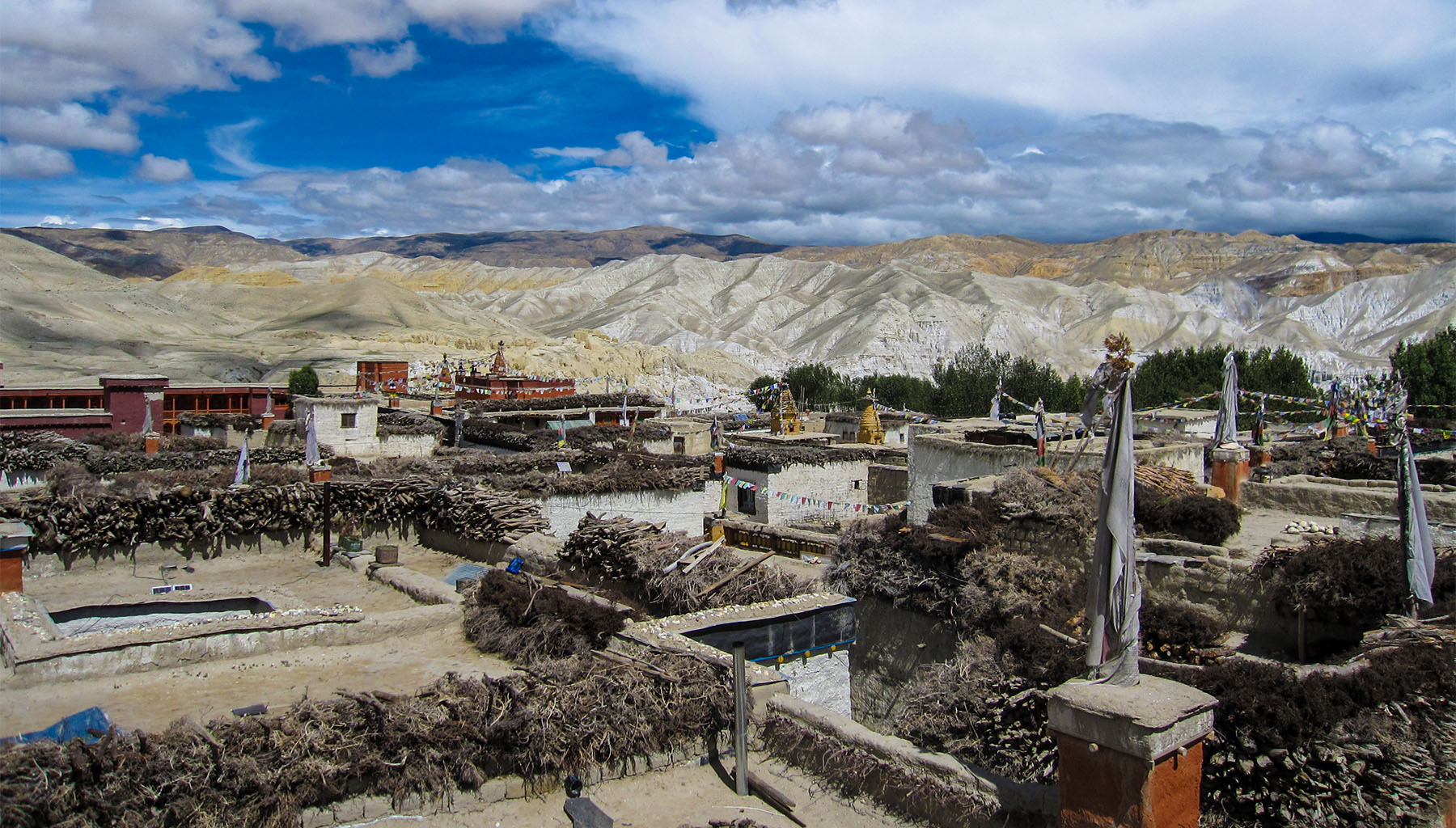
Why Visit Lomanthang?
- Experience a living Tibetan culture in Nepal
- Explore ancient royal palaces and monasteries
- Witness desert-like trans-Himalayan landscapes
- Discover mysterious sky caves and ancient Buddhist art
- Feel the unique atmosphere of a walled medieval kingdom still standing
