
"Melting Ground Triggers Flood Disaster in Humlas Til Village"
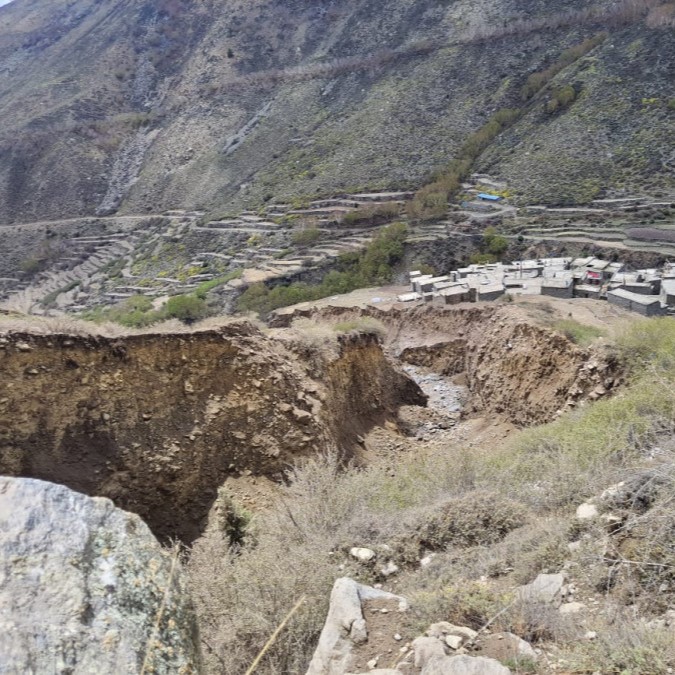
May 1st, 2025, the remote Til village of Namkha Rural Municipality in Humla District was hit by a rare and alarming natural disaster, one that is now being linked to climate change and permafrost melt, a process scientifically known as thermokarst. The incident, believed to be Nepal’s first recorded thermokarst-induced landslide, has raised serious concerns among climate scientists and disaster risk authorities.
What Happened in Til Village?
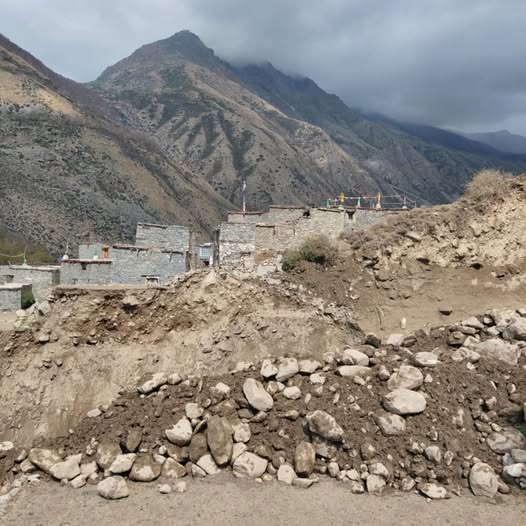
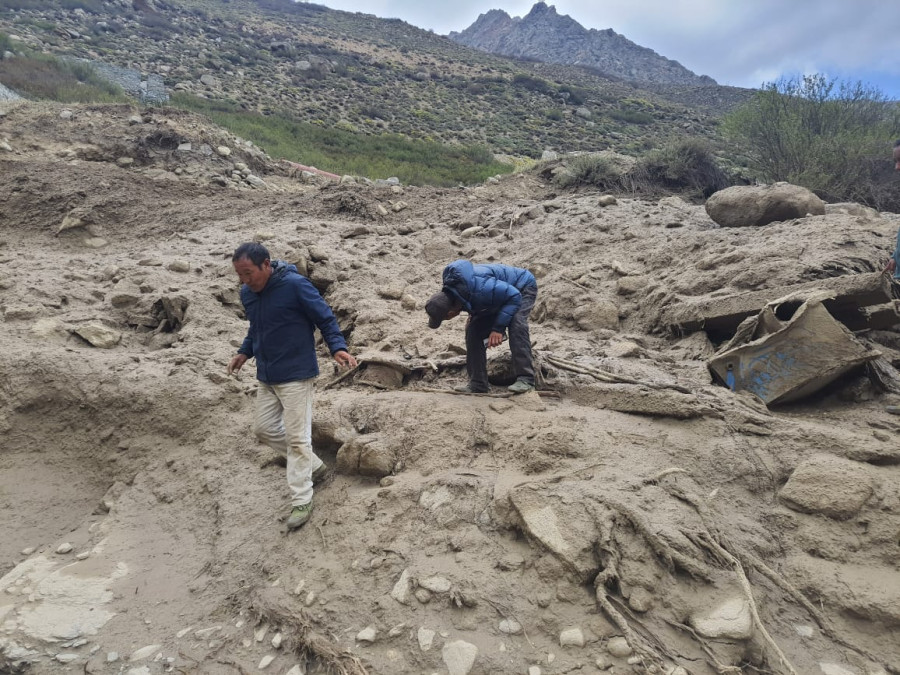
In the early hours of May 1st, a sudden flood and landslide struck Til village, destroying two homes, a 15-kilowatt micro-hydropower plant, five wooden bridges, and the irrigation systems of nearly 400 fields. Thirty-two families from 18 homes were displaced as the Tilchung River overflowed with debris and runoff.
This was no ordinary landslide it was triggered by a process few had heard of until recently: thermokarst.
What is Thermokarst and Why Is It Dangerous?
Thermokarst refers to the landscape deformation and collapse that occurs when permafrost (permanently frozen ground) begins to thaw due to rising temperatures. As this frozen layer under the Earth's surface melts, it can lead to ground destabilization, floods, landslides, and even the formation of sudden sinkholes or lakes.
A technical team from Kathmandu comprising experts from the National Disaster Risk Reduction and Management Authority (NDRRMA), the Department of Mines and Geology, and the Department of Hydrology and Meteorology was dispatched to investigate. Their preliminary findings confirm that thermokarst was the main cause of the disaster. Notably, the team discovered three glaciers at 5,350 meters, where previously only two were known, indicating ongoing glacial change in the region.
A Climate Warning from Humla
This marks the first officially identified thermokarst event in Nepal, according to Arun Bhakta Shrestha, senior climate change expert at ICIMOD. Satellite analysis backed up the claims.
While Nepal is no stranger to glacial lake outburst floods (GLOFs), this event is not linked to a glacial lake explosion. Instead, it originates from melting permafrost beneath the surface, making it a new and emerging threat for high-altitude communities.
The Human Cost of a Warming Himalaya
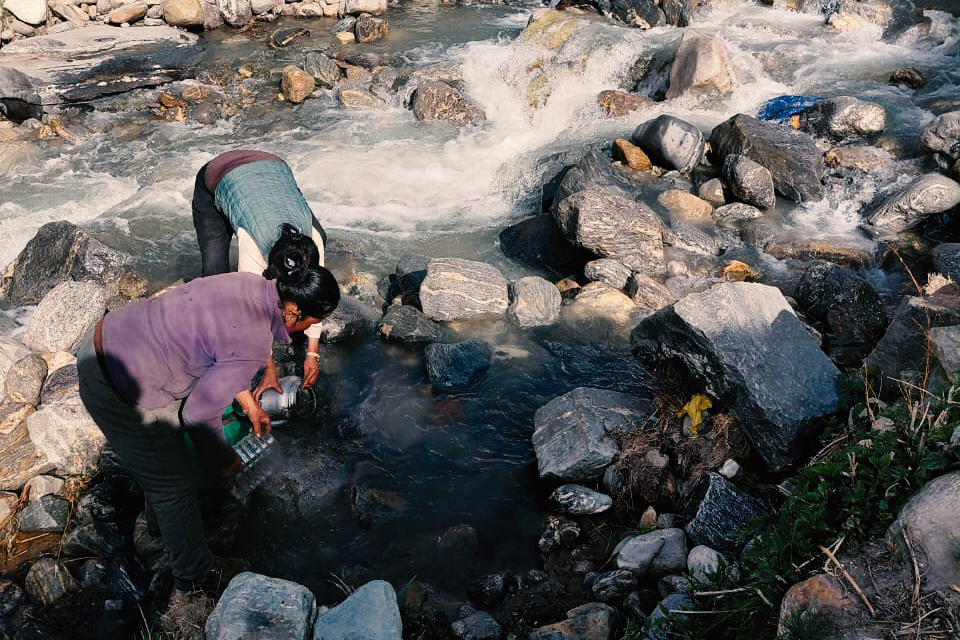
The disaster displaced dozens of families, damaged infrastructure worth millions of rupees, and left the community's entire water system in ruins. What’s worse, the incident occurred in one of Nepal’s most remote and underserved regions, where emergency aid, reconstruction, and even basic connectivity are hard to come by.
Til village is not alone. As Himalayan temperatures continue to rise faster than the global average, permafrost zones once stable are quietly eroding beneath the surface, posing silent threats to settlements, trails, and infrastructure across northern Nepal.
Why This Matters Beyond Til
What happened in Til is a wake-up call. It reveals a climate danger hiding in plain sight: melting ground. For a country like Nepal, with thousands of kilometers of trails, villages, roads, and heritage sites built into mountain slopes, the implications of permafrost thaw are enormous.
The disaster highlights the urgent need for:
- Scientific research and mapping of Nepal’s permafrost zones.
- Early warning systems that can monitor ground temperature, ice content, and slope stability.
- Community awareness and localized disaster preparedness, especially in high-altitude regions.
A Future at Risk
While glaciers have long been recognized as barometers of climate change, the thawing of frozen ground beneath our feet is an equally serious threat and one that is now unfolding in the high Himalayas.
The flood in Til village is more than a one-off disaster; it’s a symptom of a changing mountain ecosystem. And it raises a fundamental question for the future of Himalayan settlements: What happens when the land itself is no longer solid?
