
Oldest Temples in Kathmandu: History, Timeline & Heritage Guide (2026)
Oldest Temples in Kathmandu: Timeline, History & Founders
Delve past the guidebooks. Uncover centuries of dynastic engineering, pristine 5th-century stone inscriptions, and the resilient restoration paths of the Kathmandu Valley's oldest sacred spaces.
The Architectural Matrix
| Temple Name | Approx. Construction | Historic Founder | Dynasty | UNESCO Status | 2026 Restoration Condition |
|---|---|---|---|---|---|
| Swayambhunath Stupa | c. 5th Century AD | King Vrishadeva | Licchavi Dynasty | Inscribed 1979 | Fully Restored |
| Changu Narayan | c. 464 AD (Inscription) | King Manadeva | Licchavi Dynasty | Inscribed 1979 | Seismically Upgraded |
| Pashupatinath Complex | c. 5th Century AD Base | King Prachanda Deva | Licchavi to Malla | Inscribed 1979 | Pristine / Intact |
| Boudhanath Stupa | c. 6th Century AD | King Sivadeva | Licchavi Dynasty | Inscribed 1979 | Fully Restored |
| Kasthamandap | c. 7th Century AD | Licchavi Artisans | Licchavi Dynasty | Monument Zone | Rebuilt Traditionally |
The 10 Deepest Roots of Kathmandu

- Founder: King Vrishadeva
- Style: Hemispherical Dome
- Status: Active Worship
- Entry Fee: NPR 200 (Foreigners), Free for Nepalese
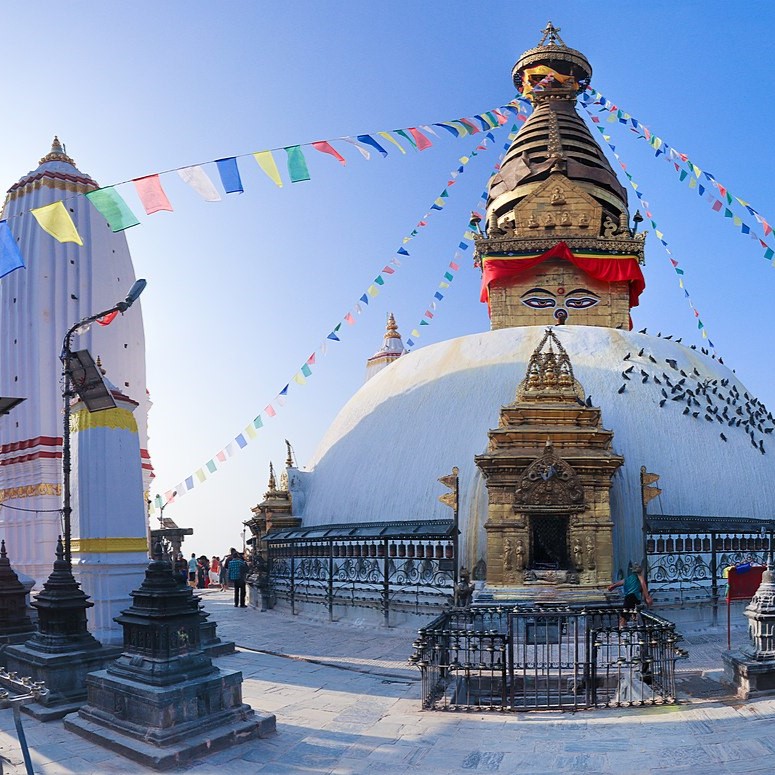
Perched on a conical hill west of Kathmandu, Swayambhunath represents the oldest active ritual landscape in the valley. While legend outlines its roots to the primal lake of creation, historical scripts attribute structural foundations to Licchavi King Vrishadeva.

- Founder: King Manadeva
- Style: Multi-tiered Pagoda
- Inscriptions: 464 AD Pillar
- Entry Fee: NPR 500 (for Foreigners)
Undisputed as the oldest verified architectural structure in Nepal, Changu Narayan houses the definitive 464 AD Sanskrit pillar inscription. It marks the true boundary where myth transitions cleanly into documented South Asian history.

- Founder: King Prachanda Deva
- Style: Gilded Double Pagoda
- Riverfront: Bagmati River
- Entry Fee: NPR 1000 (for Foreigners), Free for SAARC & NEPALI
Serving as the core node of live devotion within South Asia, Pashupatinath coordinates centuries of structural additions. While its current outer gold cladding was finished in 1696 AD, the internal ritual stone Mukhalinga has been worshipped continuously since the 5th century.
Integrate Into Custom Tour
- Founder: King Jayasthiti Malla
- Style: Five-Tiered Pagoda
- Location: Lalitpur (Patan)
- Entry Fee: Area Entry Ticket
One of only two remaining five-tiered pagodas in the valley, Kumbheshwor showcases the peak architectural engineering of the early Malla era, built over an ancient sacred spring that feeds its courtyard tanks directly.
Integrate Into Custom TourThe Deep Chronology of the Valley
The Ashokan Foundations
Emperor Ashoka visits the valley basin; sets up early protective earthen mounds and circular shrines around Patan.
The Epigraphic Milestone
King Manadeva erects the stone column at Changu Narayan, creating the first undisputed written document of Nepalese history.
The Carbon-Dated Pavilion
Early foundations of Kasthamandap are raised using timber structures that modern carbon-testing tracks back directly to the Licchavi Era.
The Malla Renaissance Peak
King Jayasthiti Malla expands multi-layered woodwork, scaling towers like Kumbheshwor to five tiers of structural height.
The Post-Seismic Revival
Over 89% of damaged architecture stands fully resurrected using hidden seismic corner stitches and traditional timber-joinery methods.
Who Shaped the Sacred Landscape?
Licchavi Dynasty
Introduced Sanskrit epigraphy, fine basalt stone carvings, and monumental foundational layers like Budhanilkantha and Changu Narayan between the 4th and 9th centuries.
Malla Era
Perfected the iconic multi-tiered timber pagoda style, bringing an explosion of competitive artistic engineering across the three core sister squares of Kathmandu, Patan, and Bhaktapur.
The 2026 Resurgents
Led by modern local community guilds and youth volunteer archivers who rejected modern concrete to revive the traditional lime-surkhi plaster mixes and pure timber joinery.
Which Temple is Truly the Oldest?
Scholars categorize the baseline definitions of antiquity into three distinct frameworks to maintain historical integrity:
- Swayambhunath: Holds the crown for the oldest verifiably occupied ritual landscape in the valley.
- Changu Narayan: Stands as the oldest verifiably dated structure via pristine physical epigraphy (464 AD).
- Pashupatinath: Represents the longest unbroken lineage of continuous living institutional worship.
Responsible Travel Protocol
These architectural zones are active spiritual realities, not open-air static museums. Always walk around stupas and altars in a clockwise path, remove all leather elements where posted, and dress to cover both shoulders and knees.
To ensure authentic context, consider selecting a government-licensed local guide from a trusted agency like Mountain Tiger Nepal.
Frequently Asked Questions
Based on direct physical evidence, Changu Narayan is the oldest temple. It houses a stone pillar inscription dated to 464 AD, establishing it as the earliest verifiably recorded structure in Nepal.
The name comes from the incredible concentration of religious shrines across the valley. Historically, the area sat at a wealthy crossroads of trans-Himalayan trade routes, allowing local rulers and merchants to fund thousands of monuments.
Non-Hindus are restricted from entering the main inner courtyard of Pashupatinath. However, visitors enjoy excellent, unobstructed views of the golden roofs and riverbank rituals from the designated public terraces located just across the Bagmati River.
Photography is generally permitted within the open public courtyards of most temples. However, taking photos inside the inner sanctum where the main deity rests is strictly prohibited. Always look for warning signs or ask your guide before clicking.
You should dress modestly. Men and women should wear clothing that fully covers both shoulders and knees. Avoid wearing low-cut tops, short shorts, or clothing featuring offensive graphics.
By 2026, over 89% of all damaged historical structures in the Kathmandu Valley have been successfully restored or completely rebuilt using advanced traditional architectural techniques.
In both Buddhist and Hindu traditions, circumambulating a sacred space clockwise keeps your right side—traditionally considered the clean and respectful side of the body—facing the deity, symbolizing reverence.
The Newari style is characterized by multi-tiered pagoda roofs covered in clay tiles or gilded copper, supported by carved wooden struts, and built upon elevated, stepped brick platforms (plinths).
The painted eyes represent the all-seeing eyes of the Buddha, gazing out in all four cardinal directions to symbolize omniscience, boundless compassion, and continuous protection over the valley.
While mythological accounts state it is prehistoric, archaeological evidence and early inscriptions trace its structural foundations back to the early 5th Century AD (c. 400 AD), during the Licchavi Dynasty.
Yes, the 365 stone steps are safe to climb, but they are quite steep. If you have mobility challenges or wish to save your energy, your driver can easily drop you off at the western hilltop parking lot, which features a flat walkway directly into the stupa complex.
Restoration works have been funded through a successful mix of national budgets from the Department of Archaeology, major international heritage grants (from Germany, India, China, Japan, and the US), and generous donations from local community groups.
Budhanilkantha houses the largest single-block stone carving in Nepal, depicting a 5-meter-long Lord Vishnu reclining on the coils of the cosmic serpent Shesha. It dates back to the 7th Century AD.
The absolute best time to visit is during the autumn (October to November) and spring (March to April) seasons. These months offer clear skies, comfortable temperatures, and coordinate with major cultural festivals.
Yes, the three Durbar Squares (Kathmandu, Patan, and Bhaktapur) and major stupas charge entry fees for foreign and SAARC tourists. The funds are used directly for the continuous upkeep and security of the monuments.
Traditional Newari architecture relies on sophisticated mortise-and-tenon wood joinery systems. This allows the timber frames a natural degree of flexibility, helping them absorb and dissipate seismic energy during earthquakes without snapping.
Kasthamandap is a monumental wooden pavilion from which the city of Kathmandu gets its name. Originally thought to be built in the 12th century, recent excavations proved its foundations date back to the 7th Century AD. It was completely rebuilt post-2015 using traditional methods.
Open-air ritual cremations are performed continuously along the raised stone platforms (Ghats) lining the Bagmati River at the Pashupatinath Temple complex. Visitors should observe quietly and respectfully from across the river.
Unlike the tiered wooden pagoda, a Shikhara temple is a tall, tapering tower built out of stone or brick, shaped to resemble a sacred mountain peak. It reflects classical North Indian temple design.
Yes, Swayambhunath is famously nicknamed the "Monkey Temple" due to the large troops of rhesus macaques living on the forested hillsides. They are generally used to humans, but you should avoid carrying visible food, flash photography, or making direct eye contact, as they can grab loose items.
A Stupa is a solid, hemispherical dome structure containing sacred relics, used primarily for circumambulation. A Pagoda is an open-entry, multi-tiered tower temple housing an inner sanctum where priests perform indoor rituals for a deity.
Yes, independent guides are available near the entrance gates of major UNESCO sites. However, to guarantee historical accuracy, clear English fluency, and consumer protection, it is highly recommended to book a guide through an established DMC like Mountain Tiger Nepal.
Young Nepalis are utilizing digital technology, 3D mapping, and platforms like Instagram and TikTok to archive temple designs and share cultural history, building strong preservation awareness among the younger generation.
The KVPT is a dedicated non-profit organization founded in 1991. It plays an important role in safeguarding architectural heritage, leading the scientific restoration of dozens of monuments across Patan and Kathmandu.
You can easily book a custom itinerary by contacting the destination experts at Mountain Tiger Nepal through their official website (www.mountaintigernepal.com). They provide customized itineraries, private transport, and certified heritage guides.
History is Best Understood Where it Was Created
Whether you are an architectural researcher, an explicit photographer, or a cultural traveller wishing to see the living framework of the Himalayas, Mountain Tiger Nepal builds thoughtfully customized, highly responsible itineraries tailored around your curiosity.
| 2005 | Established & Serving |
|---|
| 100% | Govt Registered DMC |
|---|
Design Your Heritage Journey
Connect directly with our 2026 destination specialists.
