
Tibetan Prayer Flags: Lung ta & Darchog
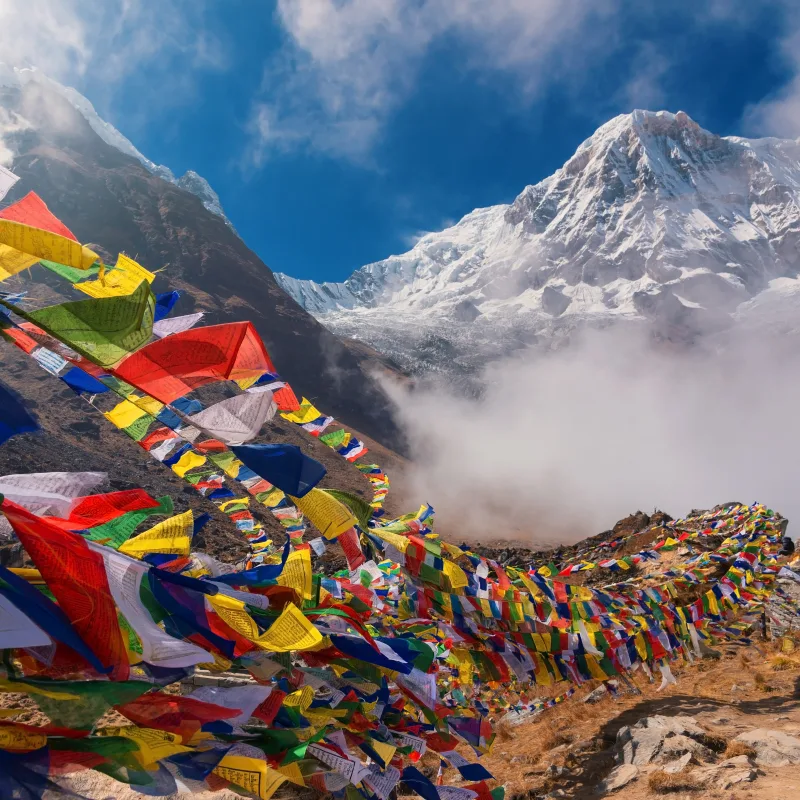
In the thin air of the Himalayas, we see the strings of fabrics fluttering in the wind. These are Tibetan prayer flags, and they tell a story that spans across centuries.
In Tibetan, there isn't one single word that means "prayer flag" the way we say it in English. Instead, they have different names depending on the style. The colourful horizontal flags you often see strung between trees, rooftops, or mountain passes are called Lung ta, which means "Wind Horse." They usually have a picture of a horse in the center, believed to carry prayers on the wind. The tall vertical flags you see standing on poles are called Darchog, which loosely means "flag on a pole." These are often put up during special occasions or to bless a space. So instead of lumping them all under one name, Tibetan culture refers to prayer flags by their specific types, each with its own purpose and meaning.

You'll find them everywhere across Nepal, Tibet, Bhutan, and northern India. They stretch between trees, flutter from rooftops, and mark mountain passes where travelers pause to catch their breath. Every prayer flag carries an enchanted Tibetan script that gets released into the world, hoping to bring peace and prosperity to all living beings one gust at a time.
Origins and Purpose: Where Wind Becomes Prayer
Long before Buddhism arrived in Tibet, the Bon people understood something about wind. They believed it could carry more than just scent and sound. It could carry intention, hope, and protection. So they hung pieces of cloth inscribed with symbols, trusting the mountain winds to spread their prayers across the landscape.
When Buddhism took root in Tibet during the 7th century, this practice evolved. Buddhist monks began printing mantras and sacred images onto the fabric. The wind horse appeared, galloping across cotton squares. Sacred syllables like "Om Mani Padme Hum" joined the ancient symbols.
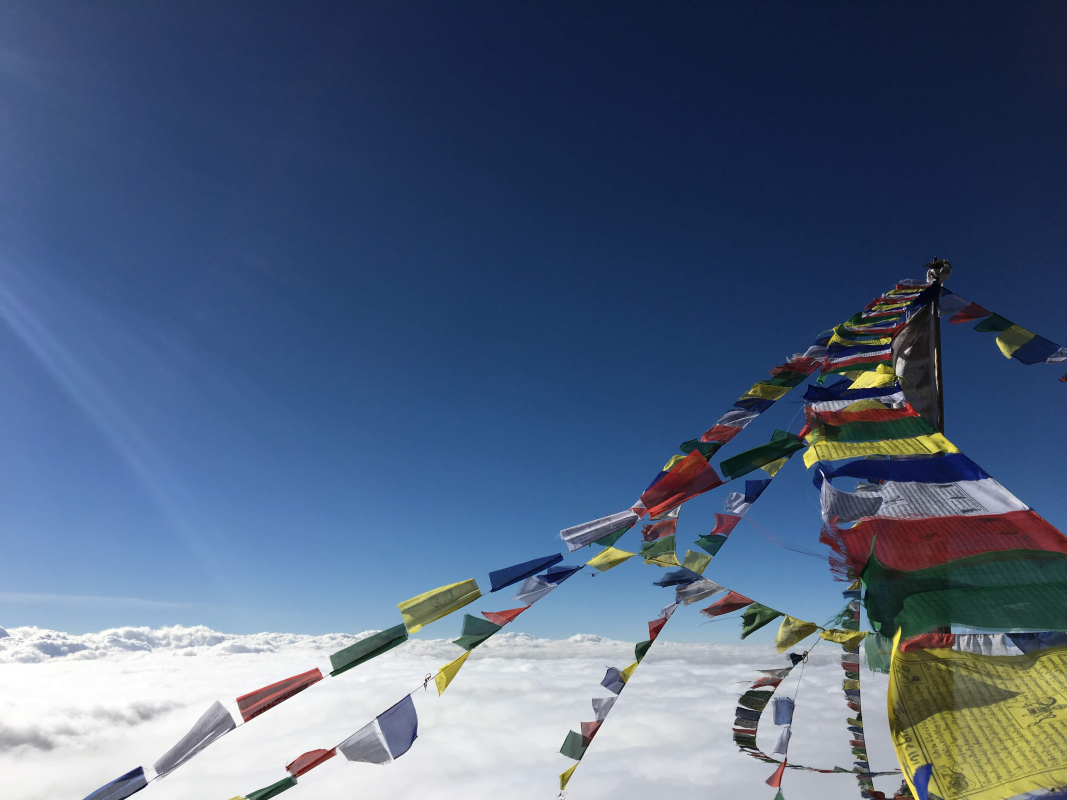
But here's what makes prayer flags different from other forms of prayer: they're not meant just for the person who hangs them. Every time the wind moves through the fabric, it carries those printed mantras outward, spreading peace and compassion to all living beings. The flags become generous prayers, their benefits extending to creatures the flag-hanger will never meet.
Two Sacred Styles: Lung ta and Darchog
Lung ta: The Horizontal Messengers
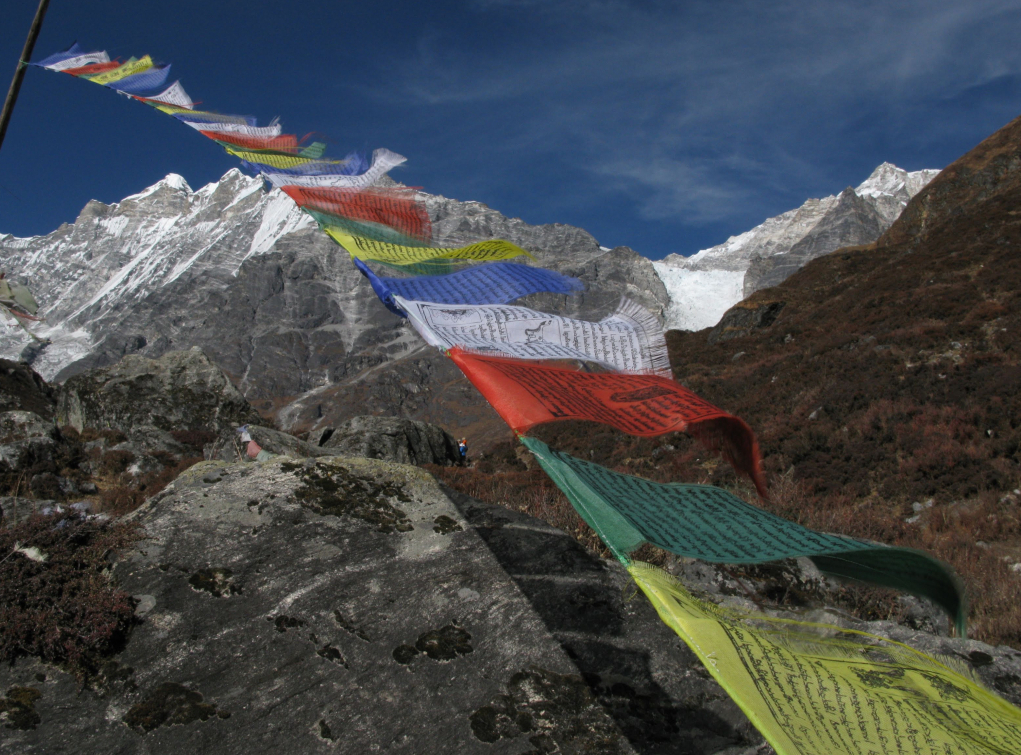
Walk any trail in the Himalayas, and you'll encounter lung ta. The name means "wind horse," after the mythical creature that carries prayers on its back as it gallops through the sky. These rectangular flags, each about the size of a sheet of paper, are strung together on a single cord.
They create bridges of colour across valleys, connecting one mountainside to another. Sometimes they stretch for hundreds of feet, their gentle movement creating a visual rhythm that draws the eye upward.
Traditional lung ta come in sets of five colours, each representing an element. Blue for space, white for air, red for fire, green for water, and yellow for earth. The order matters. When hung correctly, they create harmony between the elements, a visual reminder that everything in nature is connected.
The most common symbol on these flags is the wind horse itself, usually depicted carrying three jewels on its back. These represent the Buddha, his teachings, and the spiritual community. But you'll also see mantras, protective deities, and other sacred symbols, all working together to transform ordinary wind into something sacred.
Darchog: The Vertical Messengers
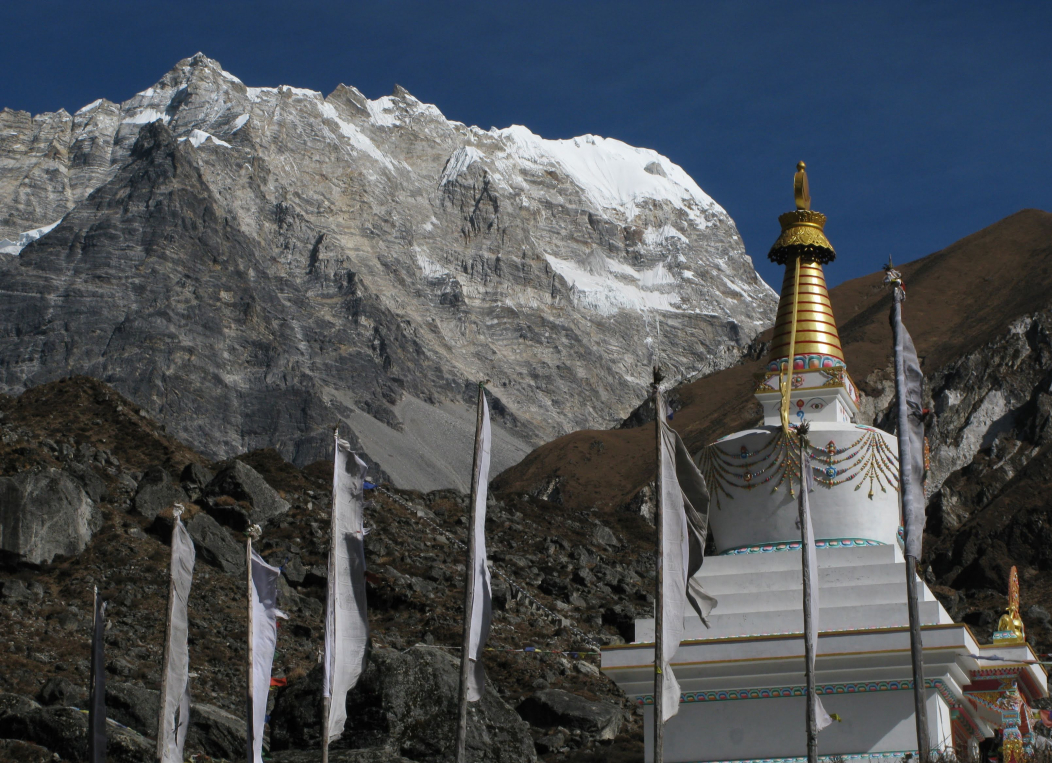
Less familiar but equally important are the darchog, tall vertical flags that stand like colourful sentinels across the landscape. These long banners are mounted on poles and planted in the ground, often reaching heights of 20 feet or more.
Unlike their horizontal cousins, darchog serve a more ceremonial purpose. They mark important events: the death of a respected teacher, the celebration of a religious festival, or the commemoration of an auspicious date. Their vertical orientation creates a direct channel between earth and sky.
You'll find these towering flags near monasteries, at sacred sites, or guarding mountain passes. They often appear in groups, creating forests of prayer flags that transform entire hillsides into sacred landscapes. During certain festivals, hundreds might be raised simultaneously, visible for miles.
Sacred Practices and Cultural Significance
Hanging prayer flags is not a casual act. In traditional Tibetan culture, flags must first be blessed by a lama or spiritual teacher. The timing matters too. Certain dates on the Tibetan calendar are considered especially favorable for hanging new flags.
Families consult astrological calendars to find the most auspicious moments, often during the new moon or on days associated with important Buddhist events. The spiritual power of the flags is believed to be enhanced when they're raised at the right time with proper intention.
The life cycle of prayer flags teaches an important lesson about impermanence. As they flutter in wind, rain, and sun, they gradually fade and fray. Their bright colours slowly surrender to the elements. This isn't seen as decay but as the natural fulfillment of their purpose. As the physical flags wear away, their spiritual essence is believed to be fully released into the world.
When flags become too worn to continue their service, they're not simply thrown away. Traditional practice calls for respectful disposal, often through burning in a small ceremony that acknowledges their sacred nature. This act of letting go serves as a meditation on impermanence, reminding observers that all things, no matter how beautiful or meaningful, eventually return to their basic elements.
The replacement of old flags with new ones creates a continuous cycle that mirrors the renewal of life itself. Families often make hanging new prayer flags an annual tradition, gathering together to string fresh banners while offering prayers for the year ahead.
Where can you Experience Prayer Flags
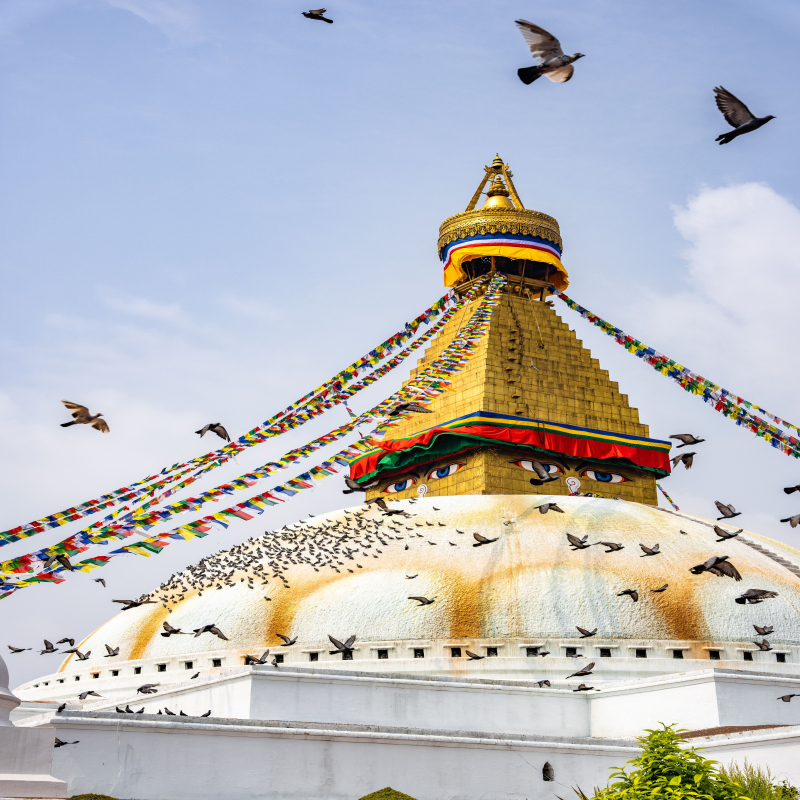
The Himalayas offer countless opportunities to witness prayer flags in their natural habitat. In Nepal, the ancient stupa of Boudhanath presents perhaps the most spectacular display, where thousands of flags radiate from the central dome like spokes on a wheel. Pilgrims walk in a clock-wise circles around the base, their movement creating a living mandala of devotion.
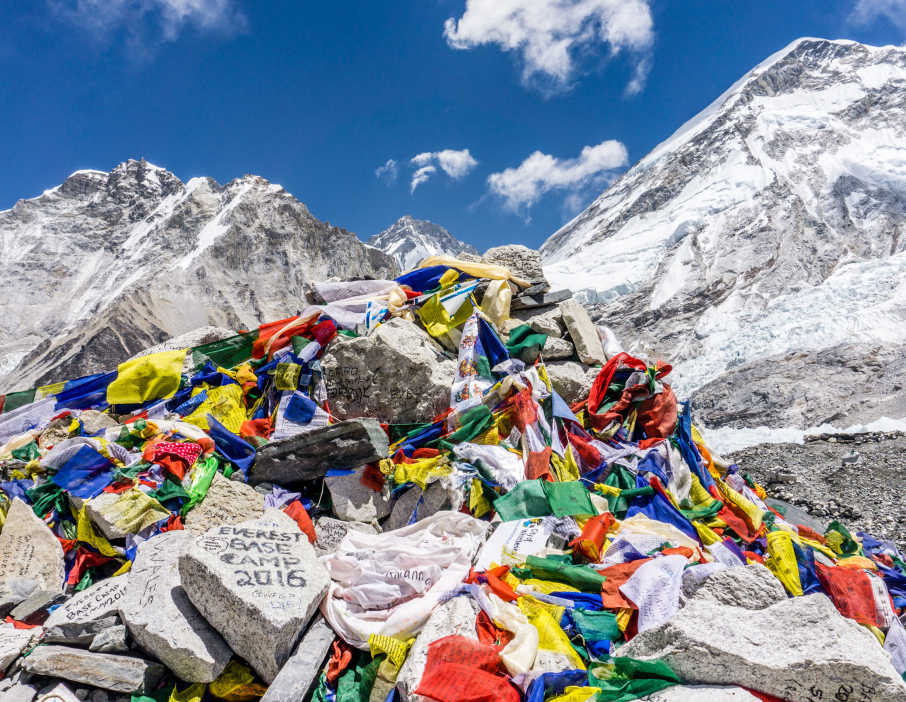
The trek to Everest Base Camp offers another perspective, where prayer flags mark waypoints and memorial sites. At Namche Bazaar, the gateway to the Everest region, flags stretch across the valley like nets of blessing, welcoming travelers to the sacred mountain realm. Higher up, at places like Tengboche Monastery, the flags take on an almost otherworldly quality, their colours intensified by the thin mountain air and brilliant sunlight.
In the hidden kingdom of Mustang, prayer flags create a landscape where ancient traditions remain largely unchanged. Here, the flags seem to connect earthbound villages with the infinite sky, their presence a constant reminder of the spiritual dimension that flows through daily life in these remote communities.
For those seeking a more intimate experience, visiting a monastery during a flag-raising ceremony provides insight into the spiritual significance of these colourful banners. The chanting of monks, the offering of prayers, and the communal effort to install new flags create a profound sense of connection between the physical and spiritual worlds.
Bhutan offers perhaps the most pristine setting for experiencing prayer flags. In this kingdom where Gross National Happiness is measured alongside economic indicators, prayer flags are woven into the fabric of daily life. They flutter from every dzong (fortress-monastery), mark mountain passes, and grace the rooftops of traditional homes, creating a landscape that seems touched by the divine.
Colours on the Wind
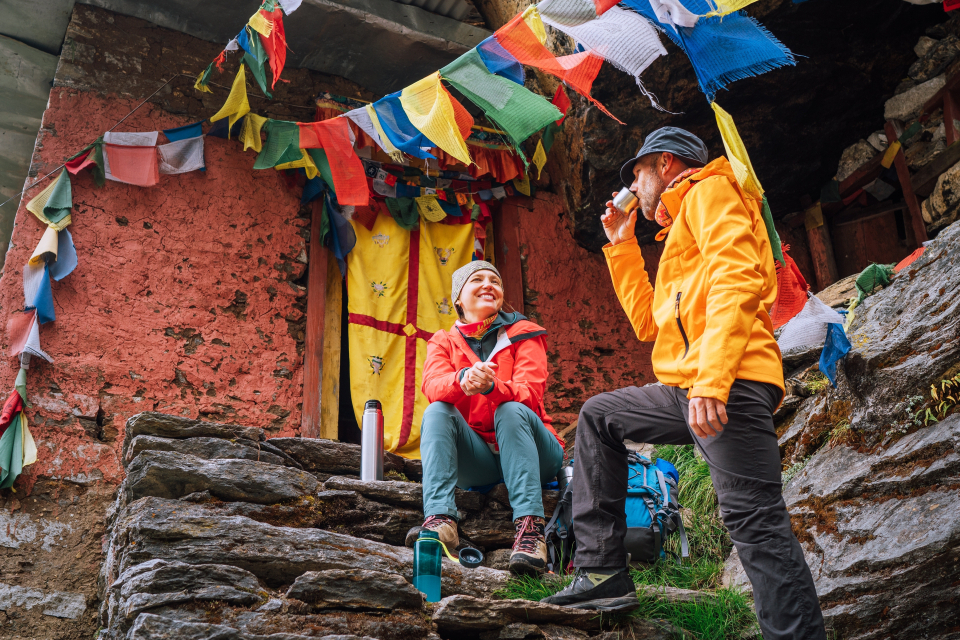
Standing beneath a canopy of prayer flags, watching them dance in the mountain breeze, you might be struck by their simple beauty. But these colourful banners carry a message that extends far beyond their visual appeal. They represent humanity's eternal desire to connect with something greater than ourselves, to send our hopes and prayers into the world in the faith that they will somehow make a difference.
In our modern world, where technology often separates us from the natural world, prayer flags serve as a bridge between ancient and contemporary life. They remind us that the wind that moves them is the same wind that fills our lungs, that the sun that fades their colours is the same sun that warms our faces, and that the Earth that anchors their poles is the same Earth that sustains us all.
The true power of prayer flags lies not in any magical properties attributed to them, but in their ability to transform ordinary spaces into sacred ones. They turn a simple mountain pass into a place of contemplation, and remind us that every breath we take connects us to the infinite web of existence that binds all living things together. They are prayers made visible, hopes given form, and compassion released into the world on the wings of the wind.
